Fiber Optic Fast Connector
Fast Connector Manufacturer & Supplier | Fiber Optic Fast Connector Solutions
Fast Connector Overview
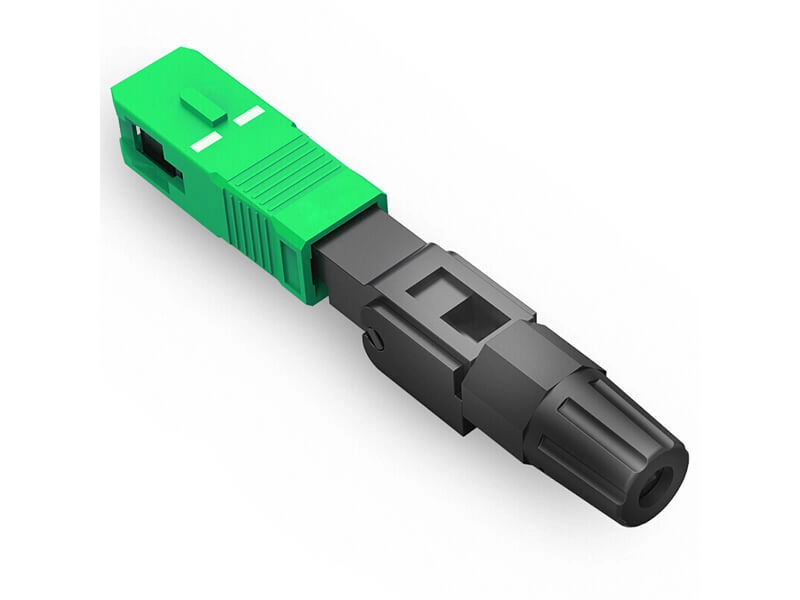
A Fast Connector, also known as a Field Installable Connector, is a pre-polished fiber optic connector designed for quick and easy fiber termination without the need for fusion splicing or epoxy polishing. Fast connectors are widely used in FTTH (Fiber to the Home), FTTx networks, telecommunication projects, data centers, and fiber optic maintenance applications.
As a professional fiber optic fast connector manufacturer and supplier, Shining Fiber provides high-quality SC, LC, FC, and ST fast connectors that enable rapid installation, reduce labor costs, and improve network deployment efficiency.
What Is a Fiber Optic Fast Connector?
A fiber optic fast connector is a mechanical splice connector that allows technicians to terminate optical fibers directly in the field. The connector contains a factory-polished ferrule and an internal fiber stub, making installation simple and reliable.
Compared with traditional connector termination methods, fast connectors offer:
- No epoxy or adhesive required
- No polishing required
- Quick field installation
- Reduced installation costs
- Consistent optical performance
- Easy maintenance and replacement
Fast connectors are particularly suitable for FTTH subscriber connections, emergency repairs, and fiber network expansion projects.
Key Features
Quick Installation
Fast connectors can typically be installed within 2-3 minutes using basic fiber optic tools.
Factory-Polished Ferrule
Each connector is pre-polished in a controlled manufacturing environment, ensuring stable insertion loss and return loss performance.
Excellent Optical Performance
- Low insertion loss
- High return loss
- Stable signal transmission
- Reliable long-term performance
Reusable Design
Many models can be reinstalled and reused, reducing project costs.
Wide Fiber Compatibility
Compatible with:
- G652D Fiber
- G657A1 Fiber
- G657A2 Fiber
- G657B3 Fiber
Cost-Effective Solution
Fast connectors eliminate the need for expensive fusion splicing equipment in many applications.
Technical Specifications
| Parameter | Specification |
|---|---|
| Connector Type | SC, LC, FC, ST |
| Polish Type | UPC / APC |
| Fiber Type | Single Mode |
| Fiber Diameter | 250μm / 900μm / 2.0mm / 3.0mm |
| Insertion Loss | ≤0.3 dB |
| Return Loss (UPC) | ≥50 dB |
| Return Loss (APC) | ≥60 dB |
| Operating Temperature | -40°C to +85°C |
| Durability | ≥500 Mating Cycles |
| Tensile Strength | ≥30N |
Available Connector Types
SC/UPC Fast Connector
The most commonly used connector in FTTH networks.
Applications:
- Fiber distribution box
- Optical terminal box
- Indoor fiber cabling
- Broadband subscriber connections
SC/APC Fast Connector
Designed for applications requiring low reflection and high return loss.
Applications:
- GPON
- EPON
- CATV
- Fiber optic distribution networks
LC Fast Connector
Compact design suitable for high-density fiber applications.
Applications:
- Data centers
- Telecom equipment
- Enterprise networks
FC Fast Connector
Threaded coupling mechanism provides secure connection.
Applications:
- Test equipment
- Industrial communication systems
ST Fast Connector
Bayonet locking mechanism for quick connection.
Applications:
- Legacy fiber networks
- Campus networks
- Industrial fiber systems
Applications
FTTH Networks
Fast connectors are widely deployed in Fiber-to-the-Home installations where rapid field termination is required.
FTTx Projects
Suitable for:
- FTTH
- FTTC
- FTTB
- FTTA
Fiber Distribution Boxes
Used with fiber distribution boxes and optical termination boxes for subscriber connections.
Fiber Optic Patch Panels
Fast connectors enable easy termination inside fiber optic patch panels and cabinets.
Telecommunications Networks
Ideal for telecom operators deploying access networks and last-mile fiber connections.
Data Centers
Provide flexible fiber termination solutions for network upgrades and maintenance.
Installation Process
Step 1: Strip Fiber
Use a fiber stripper to remove the fiber coating.
Step 2: Clean Fiber
Clean the bare fiber using alcohol and lint-free wipes.
Step 3: Cleave Fiber
Use a precision fiber cleaver to obtain a clean fiber end face.
Step 4: Insert Fiber
Insert the fiber into the fast connector until it reaches the internal fiber stub.
Step 5: Lock the Connector
Close the locking mechanism to secure the fiber.
Step 6: Verify Connection
Use a visual fault locator or optical power meter to verify signal transmission.
Advantages Over Fusion Splicing
| Fast Connector | Fusion Splicing |
|---|---|
| Quick installation | Longer installation time |
| No fusion splicer required | Requires expensive equipment |
| Lower initial investment | Higher equipment cost |
| Easy maintenance | Permanent splice |
| Suitable for field deployment | Better for large-scale projects |
For many FTTH installations and maintenance tasks, fast connectors provide a practical and economical alternative.
Quality Assurance
Shining Fiber fast connectors undergo strict quality control procedures, including:
- Insertion loss testing
- Return loss testing
- Environmental testing
- Mechanical durability testing
- Factory inspection before shipment
All products comply with international telecommunications standards.
OEM & ODM Service
As a professional fast connector factory and manufacturer, we provide:
- OEM branding
- Custom packaging
- Private label solutions
- Project-based customization
- Bulk production capability
Whether you are a distributor, telecom contractor, network integrator, or fiber optic equipment supplier, we can support your business requirements.
Why Choose Shining Fiber?
Direct Factory Supply
Competitive factory pricing without middlemen.
Stable Quality
Strict manufacturing and testing processes ensure reliable performance.
Fast Delivery
Efficient production management supports global project schedules.
Technical Support
Professional engineering team available for product selection and application guidance.
Global Export Experience
Serving customers across North America, South America, Europe, the Middle East, Africa, and Asia.
Frequently Asked Questions
What is the difference between a fast connector and a fusion splice?
A fast connector uses a mechanical splice inside a pre-polished connector, while a fusion splice permanently joins fibers using a fusion splicing machine.
Can fast connectors be reused?
Many fast connector models can be reopened and reinstalled multiple times if handled correctly.
Which fiber types are compatible?
Fast connectors are compatible with G652D, G657A1, G657A2, and other standard single-mode fibers.
Is SC/APC or SC/UPC better?
SC/APC provides higher return loss and lower back reflection, making it ideal for GPON, CATV, and FTTH applications.
What tools are needed?
Installation typically requires:
- Fiber stripper
- Fiber cleaver
- Alcohol wipes
- Visual fault locator (optional)
Request a Quote
Looking for a reliable Fast Connector supplier?
Shining Fiber offers high-performance SC/APC, SC/UPC, LC, FC, and ST fast connectors for FTTH, FTTx, telecom, and data center applications. Contact our sales team today for pricing, samples, and customized solutions.